


18 Jun Melanie’s Story: Meeting the Needs of Families in Oakland
KATE QUACH, ANYA VEDANTAMBE, CATHERINE WU
Stanford University
In this feature, Pathways spotlighted the experience of a family at Ronald McDonald House Bay Area and the organization’s work supporting families with sick children in their time of need.
ABOUT THE AUTHORS
Kate Quach ’29 is a freshman at Stanford University and the Education Director for Pathways: Stanford Journal of Public Health.
Anya Vedantambe ’28 is a sophomore at Stanford University and the Community Director for Pathways: Stanford Journal of Public Health.
Catherine Wu ’28 is a sophomore at Stanford University and the Editor-in-Chief for Pathways: Stanford Journal of Public Health.
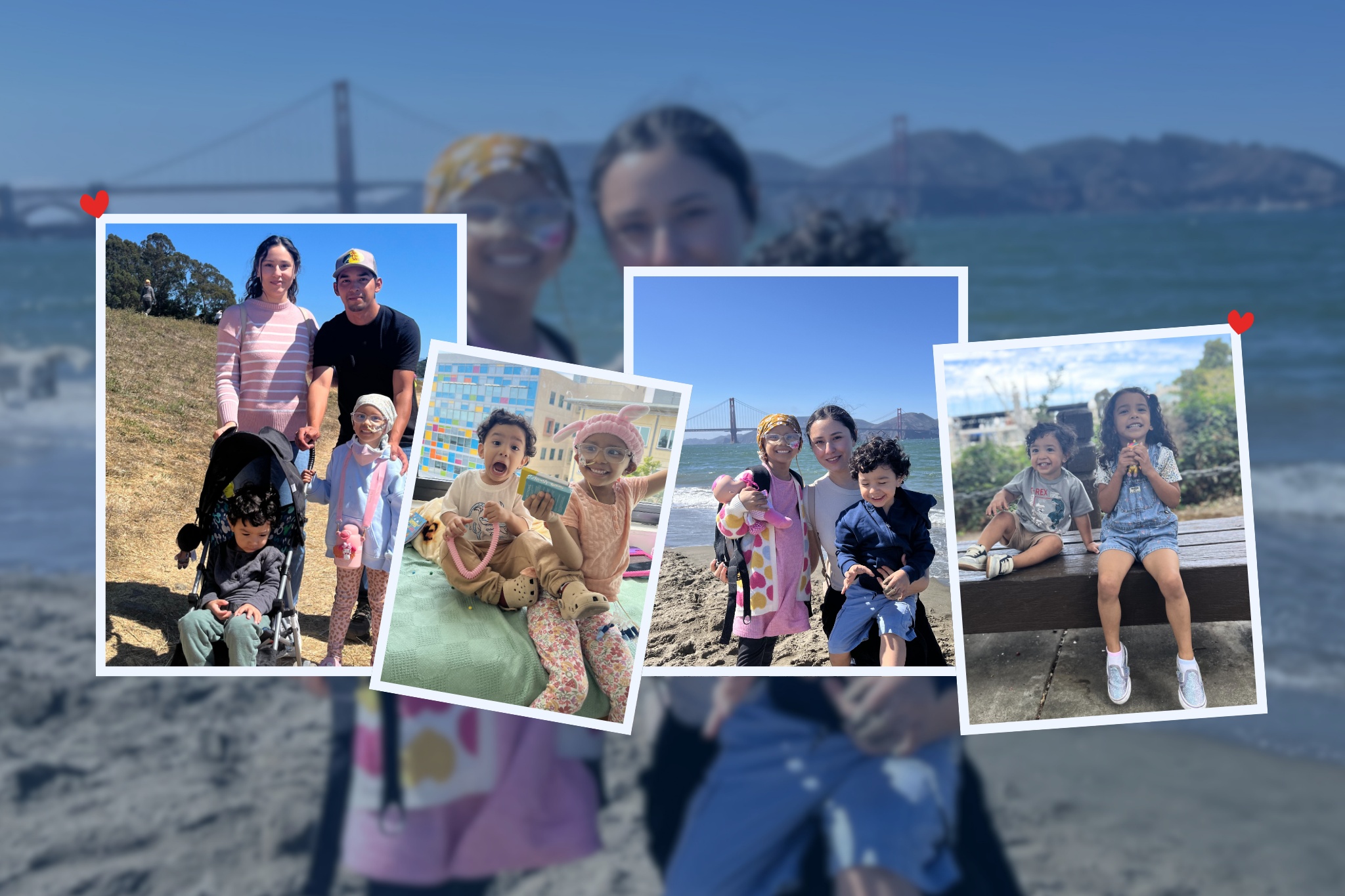
Diana Alvarez could still picture her 5-year-old daughter, Melanie, dashing toward the rock climbing walls at the park. Melanie’s little hands reached higher and higher up the structure; her voice rang aloud in song while she danced freely. “She was always a very healthy child, always very energetic,” Diana said.
Yet, headaches and extreme tiredness began unexpectedly sinking Melanie’s energy. When Diana noticed her daughter’s eyes moving irregularly, she rushed her to the emergency room. That day, the Alvarez family learned that Melanie had pineoblastoma, a rare brain tumor. They were transferred to UCSF Benioff Children’s Hospital Oakland so Melanie could receive lifesaving, specialized medical care.
“We had never encountered anyone or known anyone with cancer… It was something that just didn’t go through our minds at all.” Then, Diana, her husband Nelson, Melanie, and her son, 3-year-old Alejandro, found their lives turned upside down: they were suddenly starting chemotherapy, discussing radiation, and trying to find a way to be together as a family during the most difficult moments.
Uncertainty surged through Diana and Nelson as they worried about their daughter’s complex treatment and how they could be together. They learned Melanie would not be able to go home between chemotherapy cycles due to her highly immunocompromised state. The family struggled to find a solution that balanced prioritizing Melanie’s treatment while also staying close by her side, and then they were introduced to Ronald McDonald House Bay Area.
Ronald McDonald House Oakland, one of three main housing locations operated by the Ronald McDonald House Bay Area regional chapter, provided Diana and her family with daily warm and nutritious meals, comprehensive support programs, and a safe home directly across the street from the hospital, allowing their family to be by Melanie’s side during some of the most difficult moments.
Through Ronald McDonald House Oakland’s overnight housing and day pass services, families with children being treated at UCSF Benioff Children’s Hospital Oakland had access to housing accommodations and on-site meals. Snacks, toiletries, and age-appropriate toys were also available to patients, siblings, and their families. Together, these resources eased both financial and emotional burdens for families like Diana’s during their children’s treatment.
The larger regional chapter, Ronald McDonald House Bay Area, is an organization dedicated to providing family-centered care—housing, meals, education, psychosocial support, and more—while their children receive necessary healthcare. In 2025 alone, Ronald McDonald House Bay Area’s resources saved families $19 million worth in expenses over the course of patients’ medical treatment.
Every small victory mattered, and for Melanie, that meant days feeling a little less nauseous, enjoying time with her little brother in David’s Space playroom, and riding tricycles around the courtyard.
“One of the main feelings that we felt during the beginning of all of this was the feeling of being alone and this feeling of, ‘Why is this happening to us?’ or this feeling of, ‘We’re the only ones going through this,’” Diana said.
When Diana and her family moved in, their sense of normalcy returned. Everyday acts of cooking and eating together allowed them the opportunity to rest both mentally and physically, and be ready to bond and tackle the next cycle.
Speaking with the other families staying at the Ronald McDonald House, Diana felt comforted. “I could let my guard down a little bit,” she said. “It was a space where we could just rest in peace together.”
Diana slowly began to process the emotions she brushed away or bottled inside. The meals provided by Ronald McDonald House Bay Area were lifesaving, giving their family one less thing to worry about as they focused their attention on Melanie’s treatment.
This past year, on top of the 145,000 free meals, Ronald McDonald House Bay Area also provided families with 8,000 snack items and 12,000 gifts and other essential items.
The support extended over the weeks spent at the Ronald McDonald House Oakland drew Diana to recognize it as a second home, where her family could have a sense of just being normal again. In addition to the Alvarez family, Ronald McDonald House Bay Area hosted nearly 40,000 overnight stays in the past year, providing support for families like Diana’s in times of need.
“Being surrounded by other families that are going through similar things, and you just feel less alone. You feel this support… share your story and hear their story, hear their experiences and connect,” Diana said.